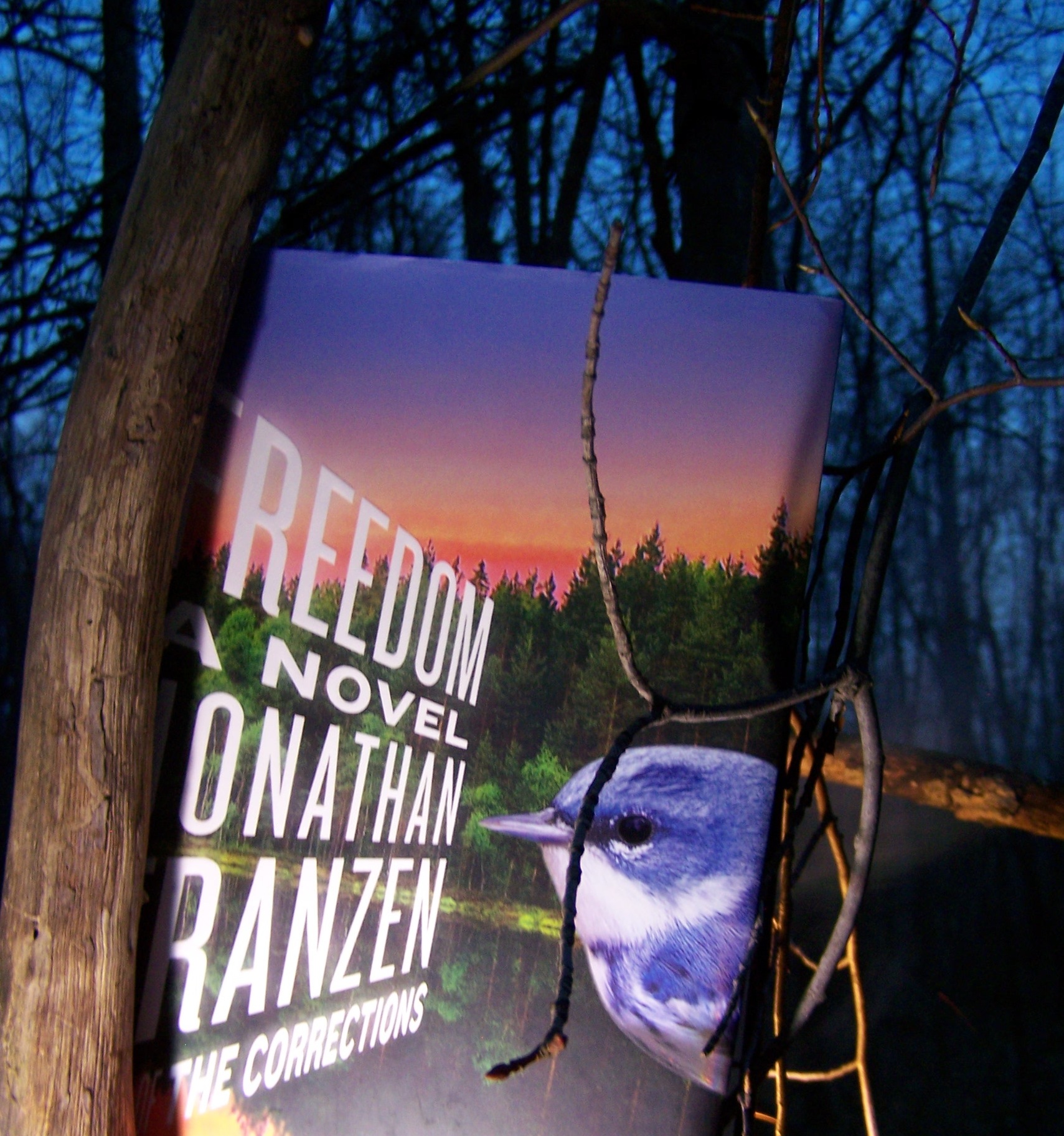
Temperature in forest: 71.
Sample sentence from Freedom:
Joey noted that it had taken no more than one allusion to her beauty to get her to open up and start talking about herself.
Temperature in forest: 71.
Sample sentence from Freedom:
Joey noted that it had taken no more than one allusion to her beauty to get her to open up and start talking about herself.
Every medium creates not only the conditions of its use, but also shapes the way we know. In textual studies, the pathways that lead us to texts somehow affect how it is we come to think about these texts. But this is so hard to quantify, so inscrutable, that it’s almost easier to forget about the medium.
In 1992, while in grad school in English at Penn State, many of the more obscure American novels that I was interested in from the early 1800s were only accessible on microfilm. Pre Google book scanning, this required trudging to the basement of Pattee Library and looking at the books on screen. There was something quietly romantic about the entire process, especially untying the paper identification tag that secured the microfilm leader to the reel. Alone in the cool, dark library basement, you got the feeling you were also alone in the world, reading something–in this case Robert Montgomery Bird’s 1839 novel The Adventures of Robin Day–that no one else was even thinking about right now.
Of course, this is nostalgia. The truth is, the microfilm reading process was only adventuresome for the first few minutes, until nausea set in as the frames whirred by on the screen. Textual motion sickness. Which is why, for texts that I really wanted to study, I’d have the library printing services make paper copies from the microfilm, which I’d then have bound at Kinko’s.
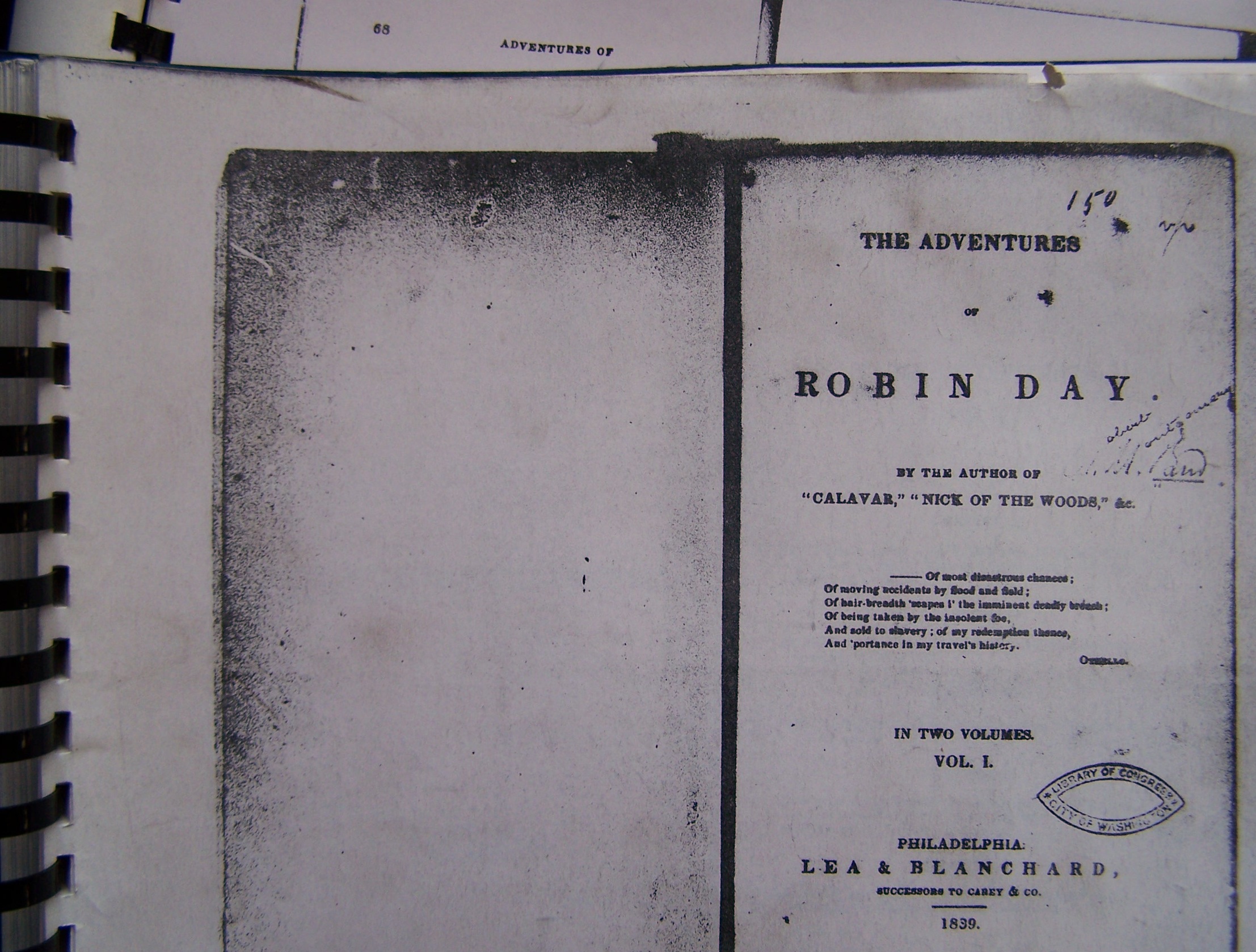
Robin Day, copied from microfilm and spiral-bound and covered at Kinko's, 1992.
Now, a novel like Robin Day is available at Google Books, whose keyword search capabilities make such obscure texts accessible in profound ways, ways that will inevitably shape the very sorts of questions we bring to such books in the first place. But beyond that, remote research and textual investigation (i.e, from wherever you are now) signals the emergence of what we might call the New Digital Romanticism. Because, oddly enough, digital technology makes possible the escape from technology, insomuch as we can now lose ourselves not in “nature” but in texts heretofore hidden, inaccessible, unknown, bringing to bear on them the force of our individual imaginations. In fact, that’s what all this excess of the digital era requires: the force of imagination, so that we become the shapers, not the shaped.
Next up: the use of the word “tatterdemalion” in Robin Day by way of the New Digital Romanticism.
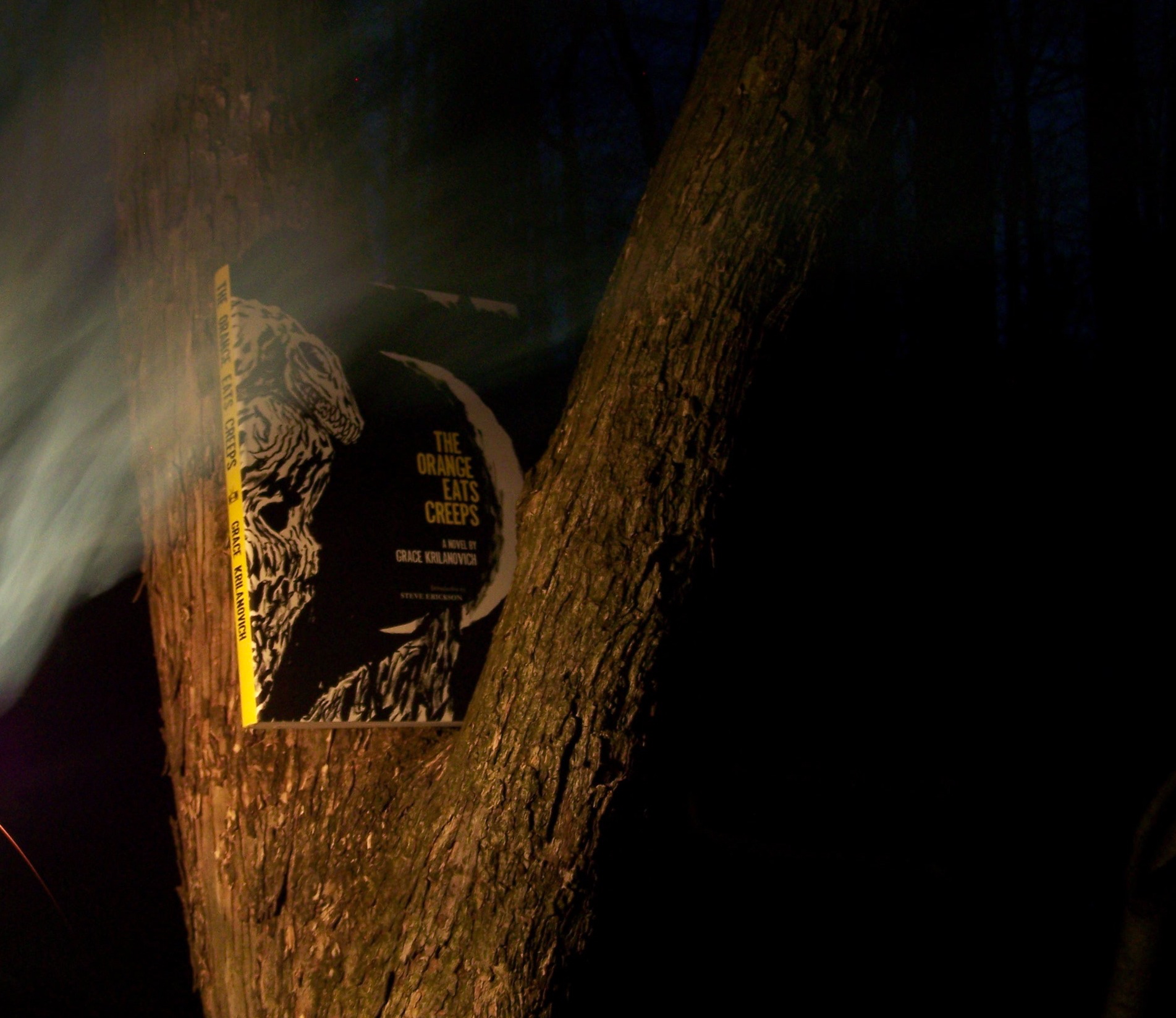
The Orange Eats Creeps, by Grace Krilanovich, in woods twenty minutes prior to storm.
While inhabiting the body of Arthur Megrim, Sheppard Lee (1836, see pt. 1) Sheppard Lee has terrible nightmares, an almost comically gruesome pile-up of exceptionally unpleasing ways to suffer and die:
My dreams, indeed, so varied and terrific were the images with which they afflicted me, I can compare to nothing but the horrors or last delirium of a toper. Hanging, drowning, and tumbling down church-steeples were the common and least frightful of the fancies that crowded my sleeping brain: now I was blown up in a steamboat, or run over by a railroad car; now I was sticking fast in a burning chimney, scorching and smothering, and now, head downwards, in a hollow tree, with a bear below snapping at my nose; now I was plastered up in a thick wall, with masons hard at work running the superstructure up higher, and now I was enclosed in a huge apple-dumpling, boiling in a pot over a hot fire. One while I was crushed by a boa constrictor; another, perishing by inches in the mouth of a Bengal tiger; and, again, I was in the hands of Dr. Tibbikens and his scientific coadjutors of the village, who were dissecting me alive.
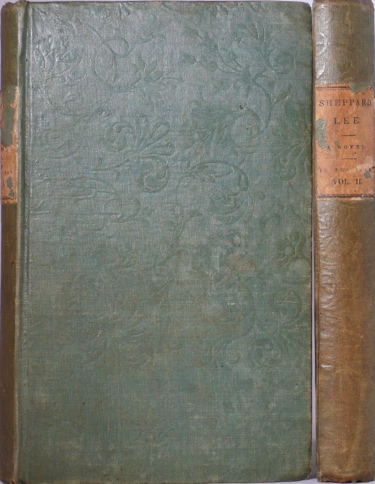
Sheppard Lee, first edition. Via The Book Row Book Shop.
A sly mockery of moral reform literature of the era? A weird twist during the emergence of the gothic crime narrative in America? (Karen Haltutten’s book Murder Most Foul: The Killer and the American Gothic Imagination is an excellent exploration of this.) An effort to push depictions of violence further than contemporaries like Edgar Allan Poe (who favorably reviewed Sheppard Lee in September 1836, and whose own story “Berenice,” which was published the previous year, was among his most sensationally extreme)?
* “tumbling down church-steeples”
* “sticking fast in a burning chimney, scorching and smothering”
* “enclosed in a huge apple dumpling, boiling in a pot over a hot fire”
Just three of twelve ways to die, in Sheppard Lee.
Some of the strangest, most violent, most reality-twisting American novels are also some of the least known. They include Sheppard Lee (1836) and Nick of the Woods, or The Jibbenainosay (1837) by Robert Montgomery Bird and The Down-Easters (1833) by John Neal. There are many more by these two authors and others, some in print and some not.
With or without knowing it, these novels document the disintegrative forces that by the 1860s would culminate in the Civil War. The novels are rough, experimental (especially in terms of bending reality and attempting to render regional and ethnic speech in the vernacular), and far less controlled than the canonical works of their contemporaries James Fenimore Cooper and Edgar Allan Poe. Here are notes (part 1, and a few images) in preparation for a longer proect. They are rough, impressionistic, mostly primary source quotes sometimes with notes pointing toward a fuller argument. I first encountered these and other strange pre-Civil War works in graduate school at Penn State while working on my dissertation on Charles Brockden Brown the Englightenment and never quite concocted a way to write about them that did justice to their fragmented, reality bending style. It might just be that the Web–and the capabilities it offers for mixing text/image, and for leap-frogging across time and space in terms of hunting down primary sources–is the best forum for writing about these marvelous texts in a fashion that somehow performs their strange magic.
SHEPPARD LEE (here is the plot summary blurb from the back of the 2008 New York Review Books edition): “the story of an incorrigible loafer who inadvertently discovers the power to project his soul into dying men’s bodies and to take over their lives. So gifted, Sheppard Lee sets off in pursuit of happiness, only to find himself thwarted at every turn. In growing desperation he shifts from body to body, now a rich man and now a poor man, now a madman and now a slave, a bewildered spirit trapped in the dark maze of American identity.”
Sheppard Lee’s journey begins when he accidentally kills himself–without knowing it; he believes he has merely knocked himself unconscious and then awoken–while digging for treasure: “I returned to the spot, but only to be riveted to the earth in astonishment. I saw, stretched on the grass, just on the verge of the pit, the body of a dead man; but what was my horror when, perusing the ashy features in the light of the moon, I perceived my own countenance! It was no illusion; it was my face, my figure, and dressed in my clothes; and the whole presented the appearance of perfect death.” // The fatal, persistent existence of the self. Sheppard Lee suffers from hyper-consciousness; even death can’t stop him from existing.
Also Emerson, from “Experience” (1844): “It is very unhappy, but too late to be helped, the discovery we have made, that we exist. That discovery is called the Fall of Man. Ever afterwards, we suspect our instruments. We have learned that we do not see directly, but mediately, and that we have no means of correcting these colored and distorting lenses which we are, or of computing the amount of their errors. Perhaps these subject-lenses have a creative power; perhaps there are no objects. Once we lived in what we saw; now, the rapaciousness of this new power, which threatens to absorb all things, engages us.” // Emerson: surface, illusion, optics, (“I become a transparent eyeball; I am nothing; I see all”) the result of the “subject-lenses” that create–rather than record–reality.
According to the Library Company of Philadelphia (from which the image below is taken), “with all his other accomplishments, Bird was also an important early experimenter in photography, specifically in the making of calotypes, or paper prints made from paper negatives. He took the same picture over and over and noted the different exposure times, light conditions, and developing formulas on the backs of both prints and negatives.” This image dates from the early 1850s:
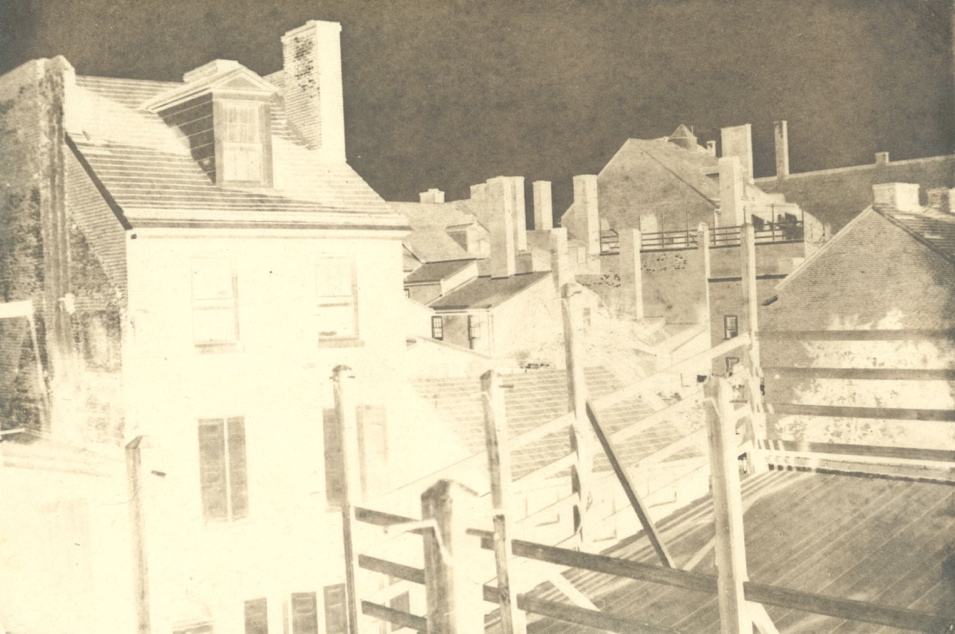
This takes us to near the end of Sheppard Lee where Lee, in the body of Arthur Megrim, discovers that his “original” body (i.e., Sheppard Lee) had not been dissected after it had been hanged (long story), but was, in fact, in one piece, which he discovers at a lecture by a German doctor named Feuerteufel, who reveals a mummy that turns out to be Sheppard Lee: “I looked upon my face–that is, the face of the mummy–and a thousand recollections of my original home and condition burst upon my mind. . . . I seized upon the cold and rigid hand of the mummy, murmuring, ‘Let me live again in my own body, and never–no! never more in another’s!”
From Invasion of the Body Snatchers (1956): You’re jumping to a bizarre conclusion that this man you live with has been replaced by somebody else.
From eXistenZ (David Cronenberg, 1999)
PIKUL (Jude Law)
I mean, where are our real bodies? Are they all right? Are they hungry? What if there’s danger?
GELLER (Jennifer Jason Leigh)
They’re just where we left them, sitting quietly, eyes closed. Just like meditating.
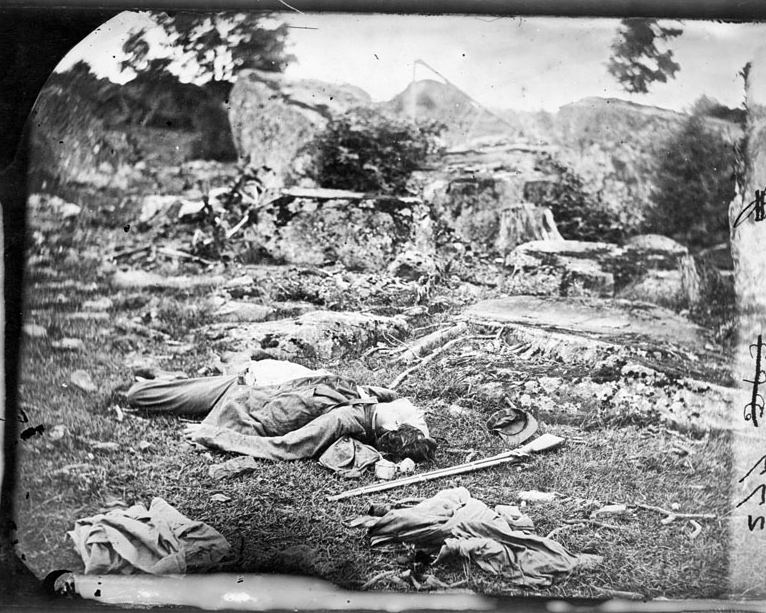
Civil War Photo (via memory.loc.gov), July 1863, Gettysburg, Pennsylvania. Soldiers’ bodies, sometimes moved and staged by photographers:
Andrew Jackson, Farewell Address, 1837:
The first line of separation would not last for a single generation; new fragments would be torn off, new leaders would spring up, and this great and glorious Republic would soon be broken into a multitude of petty States, without commerce, without credit, jealous of one another, armed for mutual aggression, loaded with taxes to pay armies and leaders, seeking aid against each other from foreign powers, insulted and trampled upon by the nations of Europe, until, harassed with conflicts and humbled and debased in spirit, they would be ready to submit to the absolute dominion of any military adventurer and to surrender their liberty for the sake of repose.
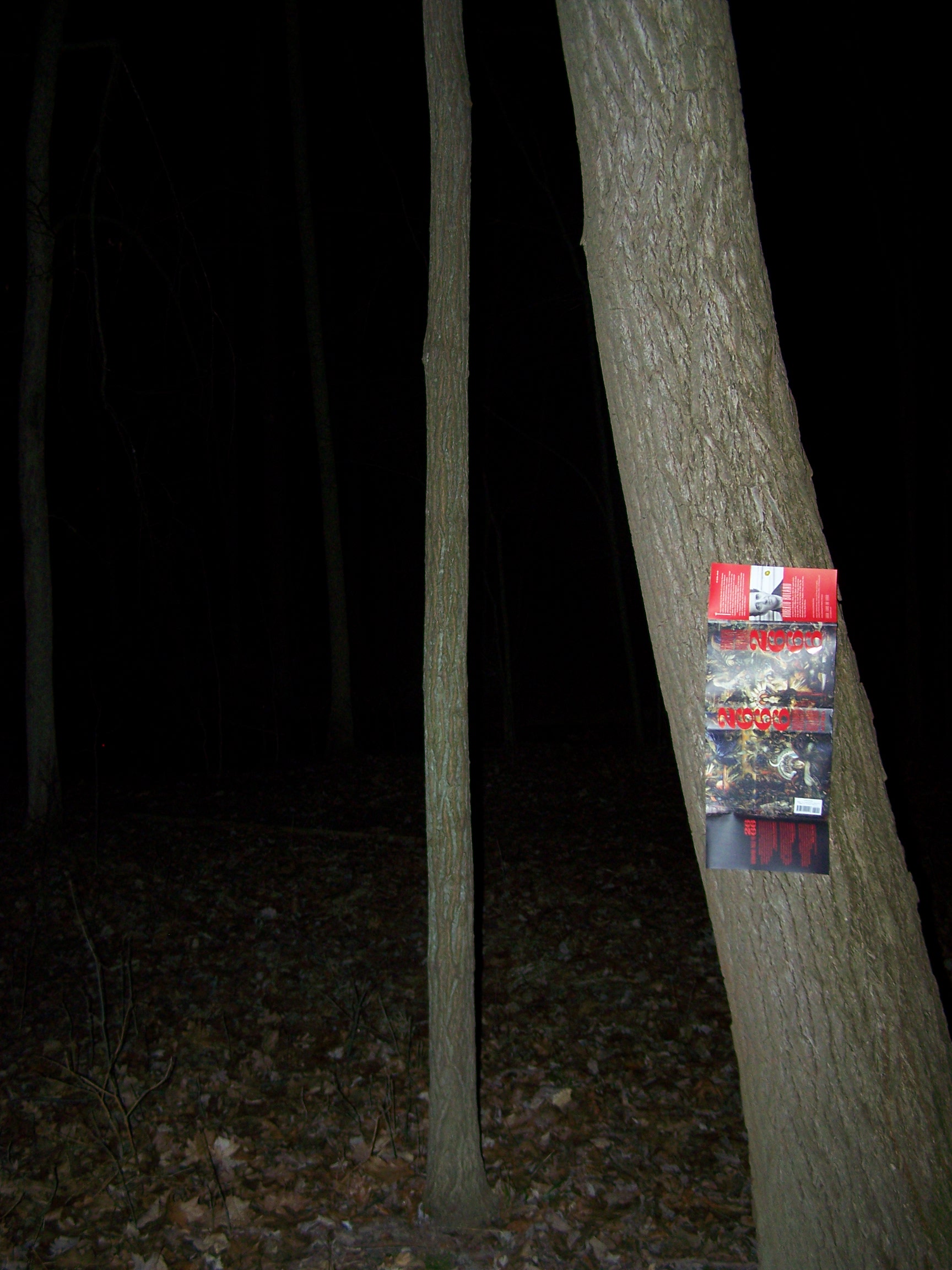
The dust jacket for Roberto Bolaño’s 2666 in woods, at night.
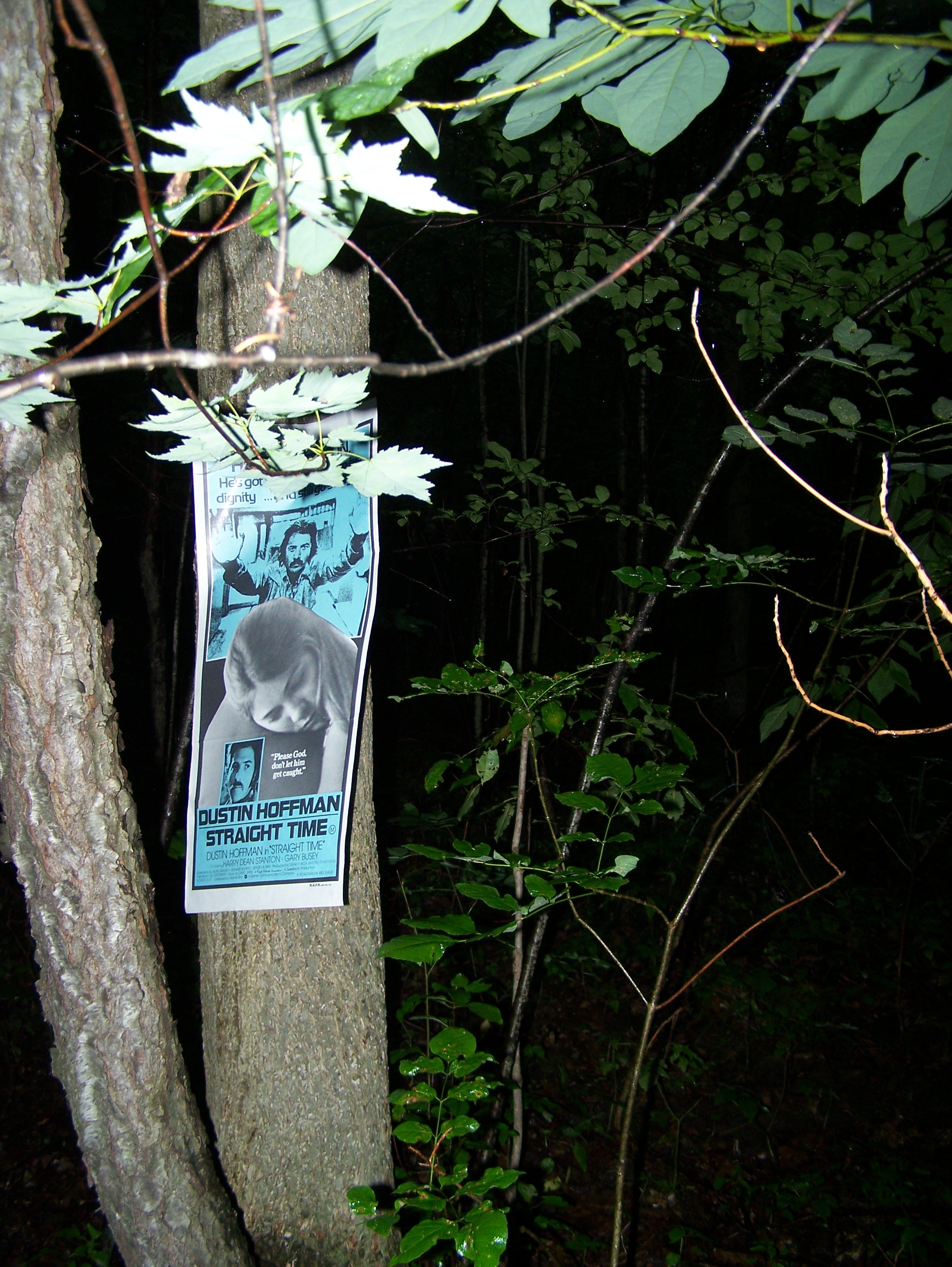
Poster in forest for Straight Time (1978), starring Dustin Hoffman.
Here is a small section I had to cut for length purposes from my D.W. Griffith piece in the March/April 2012 Believer Film Issue:
In her pioneering essay “Woman’s Place: The Absent Family of Film Noir,” Sylvia Harvey suggests that the very absence of traditional family arrangements (husband, wife, kids) from many noirs of the 1940s and 50s offered a radical opening, an absence, that allowed a space for the audience to imagine alternatives to the very idea of the family. Even though, Harvey argues, those on the screen who transgressed dominant familial norms of the time (such as the femme fatale) were in fact punished in the end (usually through death, but sometimes through social alienation), the films could not recuperate the subversive absence of the late-capitalist nuclear family.
Harvey’s 1978 essay—in just over 4,000 words—radically reconfigured our understanding of what it meant for a woman to be “punished” in film noir. The prevailing theory at the time was that these films were ideologically conservative (i.e., women were punished for thinking independently, if criminally, and for generating and leading the narrative action of these films). Harvey’s argument was that by the time the femme fatale—who was usually the most dynamic, glamorous, complex woman in the film—was punished, audiences had identified, even in some small way, with her glamorized rebelliousness. In other words, once the femme fatale was inevitably punished—usually by death—it was too late: these films could not fully restore their conservative message. This crack or gap in the films’ ideology was made possible, paradoxically, by the repressive force of the Motion Picture Production Code which, during the classic film noir era, dictated that “the sympathy of the audience shall never be thrown to the side of crime, wrong-doing, evil or sin.”
Here it is in action, in the final moments of Gun Crazy (1950), as Laurie “must” be destroyed, at around the 8:00-minute mark:
Harvey’s essay was the inspiration for my Believer piece on Griffith’s 1911 short film His Trust, whose nostalgic, status-quo message (good, loyal blacks in the Civil War South would sacrifice all to serve their white masters) is strangely and subtly undercut by the visual (not narrative) suggestion that when loyalty crosses over into love, the very sorts of racial and class boundaries that the film promotes are obliterated.
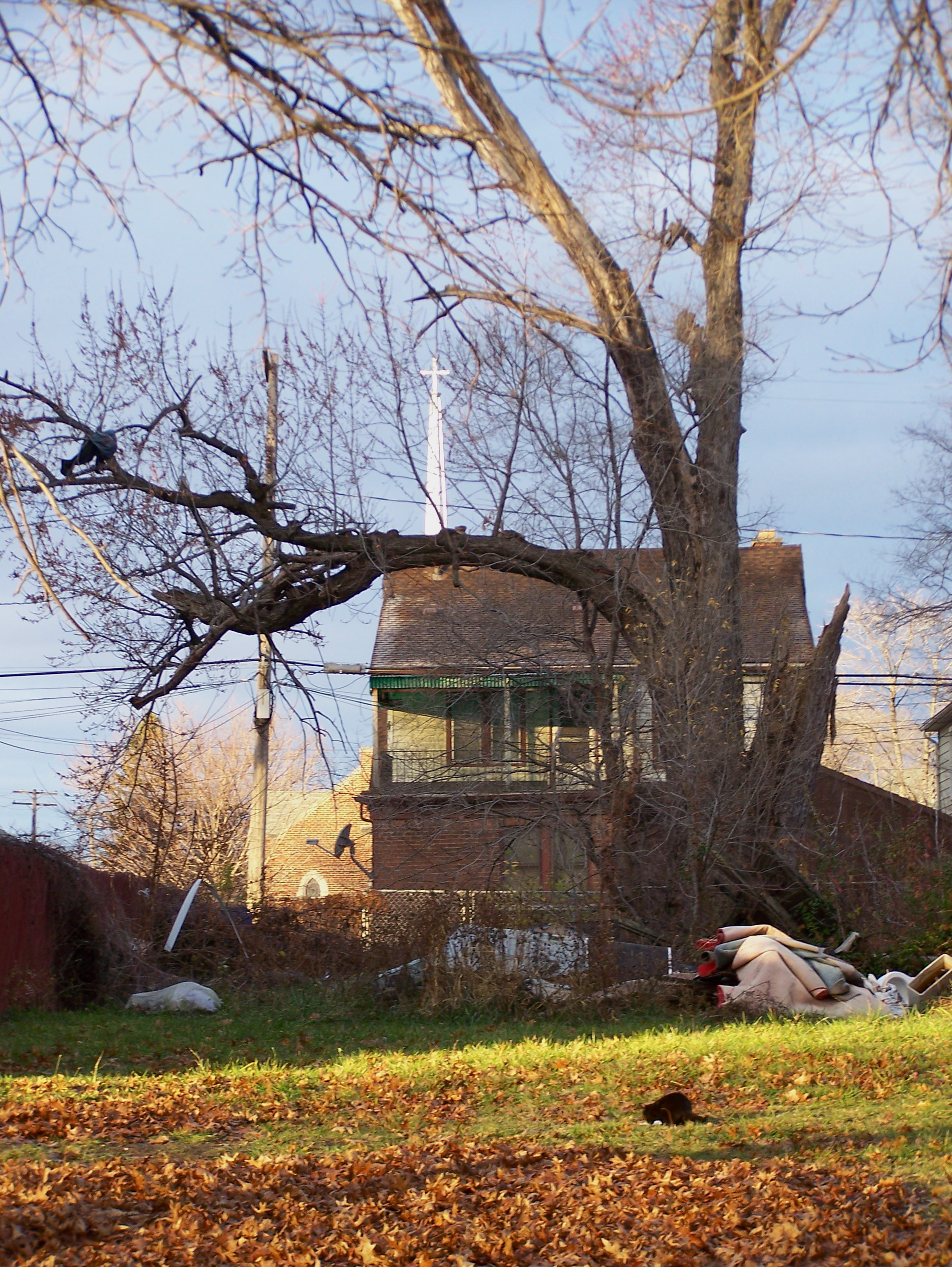
Black Cat Beneath White Cross, near the corner of Fairfield and Puritan, in northwest Detroit.
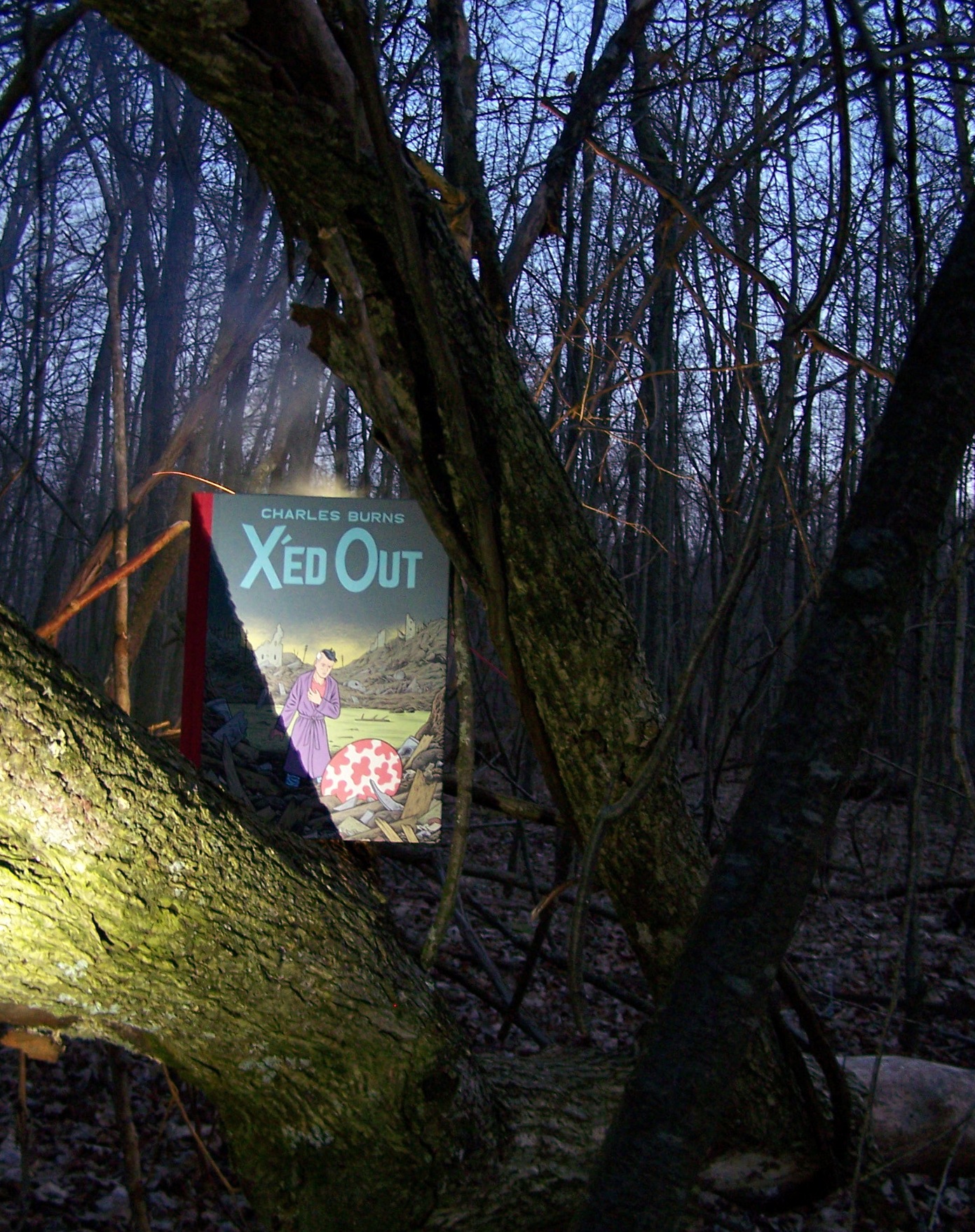
 The Blank Engine